Maths
|
At St John's, we are part of the London Central and NW Maths Hub and use the NCETM 5 Big Ideas for Maths. This is built on the idea that learning moves in small steps and that teachers reveal the learning to children in understandable chunks.
|
 |
In Key Stage 1 and 2, we use the White Rose Scheme as our overarching guide to sequence our curriculum. From this, teachers design lessons that are adapted to the needs of their class. In the EYFS, we use Mastering Number for the NCTEM as our guiding framework. Staff training and CPD is built on the NCETM and Maths Mastery materials.
Concrete - Pictorial - Abstract
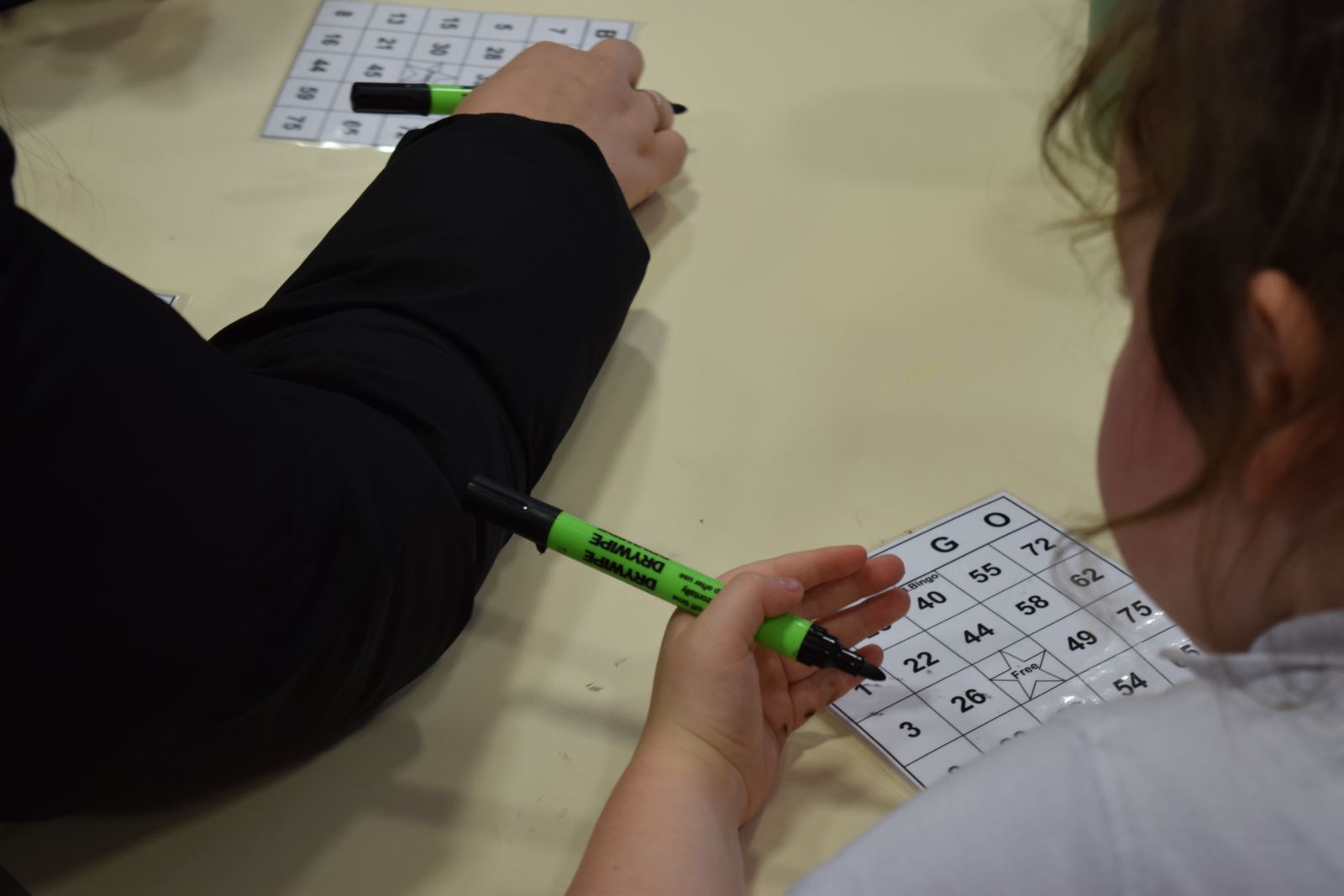
When starting a small step, all children begin by experiencing the maths using concrete resources, such as place value counters or numicon. Then, children move onto seeing the maths in different pictorial representations. This stage ensures children understand the concept of the Maths before jumping to any written procedure. This last abstract part is often what us adults think of as “Maths lesson".
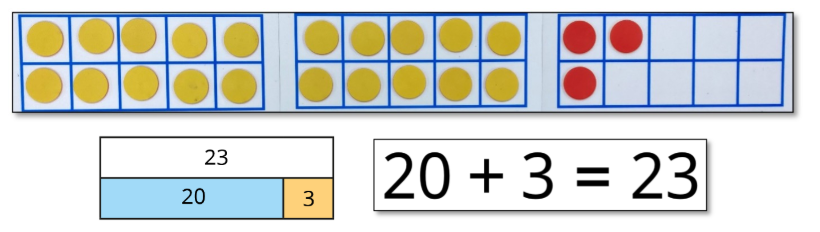
Click here for further information about the CPA approach.
Mastering Number
To ensure our children leave St John’s with a strong foundation in numbers, Reception up to Year 5 take part in daily Mastering Number sessions. This explores what, exactly, numbers are and how they relate to each other. For example In the EYFS and KS1, children will explore at the subitising, the ‘sevenness of seven’, the relationship between doubling and halves.
In KS2, children will secure flexible number bonds within 20, Go For Gold to strengthen their multiplication facts, analyse squared numbers and master factors and products.
Digital Support
To supplement our Maths learning, we use two online learning platforms: White Rose Infinity called Learning by Questions. This marks each question in real time which allows teachers to give immediate feedback. Research tells us that immediate feedback has the most impact on children’s learning.
To support the children's need for automaticity and mathematical fluency, we use White Rose Infinity to give children repeated practice in their lessons.This happens as a part of lessons before children attempt multifaceted problems.
Please see out maths one page document outlining maths at St Johns.